I never had children. None that I know of.
There I said it.
Why is it such an uncomfortable topic in our society, in so many societies? And further, why are so many “deciding” to not have children, this day and age (and are they really making an explicit decision to do so - I’d say most not)?
I was never asked much this question, during my lifetime - “Why don’t you, didn’t you, have children?”. Partly, I guess it was because like money and very intensely personal things, in Western culture, we don’t broach this subject. It isn’t anyone else’s business.
However, I have been asked the question, mostly in other cultures, in particular Latin America where having kids is a held up as a sign of being human. For a Latino, if you don’t have kids, something must be wrong - and that even goes for homosexuals. It’s just expected.
My replies throughout the years have been all over the place. I’m sure you can guess them, they are like an alibi I use against a social fabric that assumes the ultimate role of people, to be a person, is to have progeny. Here’s a short list of the excuses I’ve given, sometimes sincerely, sometimes just to deflect;
They cost a lot of money, kids tie you down, I just never felt like it, it just never happened, never met “the one”, low sperm count, act of god, never wanted that responsibility, never felt I could handle it, just look at what my father did to me, they cry, their dirty, the world has too many people …
God almighty, I could go on forever. It was all just lies. Stay with me, I’ll reveal what I think was the real reason if you stay aboard.
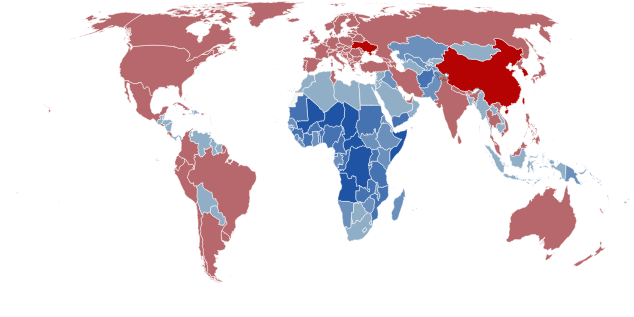
Here in South Korea, you can’t watch an hour worth of anything without the issue of “low birth rate” coming up. South Korea has the world’s lowest birthrate, it’s well beyond generational -replacement level and there are loud calls that Koreans might just disappear off the face of the earth within the next 30 odd years.
I’m not buying that. Science even says it won’t be so (though math does say the opposite). And societies can replace themselves very quickly when life seems at its end. It’s happened before and will happen again. There is an ebb and flow to procreation. But there is also the cliff …
We’d be amiss if we thought it was just S. Korea’s problem (and a few others) but throughout the developed world, most countries have pitifully low birthrates. Something is changing (I won’t say amiss).
What I find more fascinating, more interesting than the question of the slow death of nationalities, is the question that is of two parts — Why aren’t people having many kids? and secondly and of a much more serious nature - What are people for?
The academic argument is one I find confounding and seriously amiss. Like so much, it consigns causation to economic prosperity. People aren’t having kids because they now are rich, or much more well-off. Ipso-facto, they needn’t have children to insure their support during their elderly years.
I find that whole economic argument just window dressing. It looks and sounds good but doesn’t pass my smell test. People don’t have kids thinking, “Yeah, let me have one, he’ll provide me a monthly allowance when I’m old, tired, bent and busted.” No, people have kids for all kinds of proximate reasons and these are much more causative (there are so many - religion, family pressure, cultural heritage, poverty, no birthcontrol or education, social pressure, early marriage, patriarchial “values” … . Overall, I don’t buy in to any correlation between economic prosperity and lower birth rates.
I think there is a much more ontological and cultural cause, we over-look.
I’ll also say at this point - I feel that the economic causal model of low-birthrate is very racist. A hangover of our colonial diseased society.
I’m reminded of a story my mother told me about her father, an Orange Protestant, Fred Smith, from England. He’d landed in Canada, did well. Became the head of the meter department at Ontario Hydro. But my mother said, every time he saw a happy family of more than one child (my mother was a single child, adopted by elderly British parents of means), Fred would peep up and sneer, saying, “Look at those bloody Catholics, filthing up the world.”

But I digress, or do I?
What I want to say is that my own thesis about low-birthrates in societies, based on my own childless history, my own constant thought about the topic and based on my own view from the ground up of how life works is simple this - people have children (in general) because they are happy.
Notice I didn’t say, “happy because they have money”.
What’s key to happiness in never, ever money. Many rich people throw themselves off buildings too. What’s important to note is that happiness is deeply involved in being needed, wanted, loved. Happiness, what I call “contentment” is a synonym for community.
And low-birthrates, like here in Korea, signify for me, a signal that the social fabric is unravelling. We don’t know our neighbors anymore. We don’t live with grandpa and grandpa. We are socially hygenic, living lonely lives of togetherness.
People have kids because they want to belong to the social fabric, the larger family and tree of life. And when they don’t feel that yearning, are estranged, commodity driven, consumer ridden by corporate barons - they don’t have kids. It’s that simple. S. Korea has changed in that direction so it isn’t surprising in this hyper-driven to success, be wealthy society, there are so few having children. Living in boxes alone too, is a sure sign of this - almost half of Koreans now live alone, in a single dwelling. It’s a stark change over the last 50 years where you’d of been hard-pressed to find ANYONE living alone, 30 odd years ago.
Wendel Berry wrote a too not read book long ago - What Are People For? It’s a great question that we all should come up with our own answer for (and yeah - the truth can be multiple, don’t let anyone tell you otherwise).
His thesis was the same. He came to the conclusion that people are not for building pyramids, wealth generation nor even procreation, popping babies into the world (which the economically-minded diseased so dearly demand). That age old argument always, that people were here to have kids and well, that was about it. Date. Mate. Bring Home bacon. Skate off a cliff.

No, I’m not a fan of this kind of biological determinism - it’s a kind of materialism dressed up in genes. Men aren’t just jets of sperm and women not just wombs of warm to hatch some eggs. NO, people are here to LIVE.
And living at its highest calling is to live in commune with each other as the social beings we truly are. Not communists. Not equal. But each of us “prims entre pares” - first among equals. In a nutshell, we want to feel apart of something, we want to belong and be needed. That’s what people are for.
And so here we are. At a monent in time and place and historonics where it couldn’t be anymore self-evident that we live fractured, all of us so alone, afraid, distant in our private boxes, secret hearts, fearing others and longing to be loved but not knowing how to go about it, how to make community and feel at home in this world.
We aren’t having kids on a macro-level (yes, there are many, many proximate reasons too) because we are in the midst of social breakdown. Research on animals (see Universe 25), highly producing K species, suggests as much. But lets leave the research aside. We all know the truth - its because our world has too many holes and not enough fibre.

So, back to where I stared. Why didn’t I have kids? Or at least adopt?
Well, it has been a long journey getting to that answer. But about 10 years ago, stumbled upon a clue and then another and another and finally glued the pieces together to come up with a picture.
I never had kids because I alway felt, every kid was my own.
I know, this sounds grandiose. But sincerely, it is something I’ve always had in my heart, this feeling of what might be called, “brotherhood, sisterhood”. First clue was reading the New Testament (no, I’m not religious at all but I’m a curious sort for all religions and stories). Jesus says strongly, without any need of interpretation, (and I’m paraphrasing), “He who comes to me and doesn’t hate his mother or father, wife and children, even his own life, cannot be my disciple.”
My takeaway from this is that Jesus was suggesting we are all consummed into one. All of one constant. All together in this merry-go-round. If you put one above then you are putting another below and that’s not how it should go.
When I think of the lives on this planet, not even just children. I feel kinship. I feel they are apart of me and me them. Even genetics tells me so.
So I’ll leave it at that very deep personal level. I never had children because when I look at all children, Gaza or Galipoli or Galviston - they are my children. We are a community of one.